Gardening Services in Wandsworth

Gardening services in Wandsworth can help keep domestic and shared outdoor spaces tidy, healthy and usable through the seasons. Our work covers practical garden care such as mowing, hedge trimming, garden clearance, tree lopping and removal, decking services, landscaping and landscape gardening, depending on what the site needs. The aim is straightforward: keep the space manageable, improve its appearance and carry out the right task in the right order.
Some gardens need regular maintenance to stay under control, while others need a one-off visit to tackle overgrowth, fallen material or an area that is ready for improvement. We can support routine upkeep and more involved outdoor projects, with a clear focus on the work requested rather than unnecessary extras. If you are weighing up what needs doing, it is sensible to start with the visible condition of the garden, the access available and the type of finish you want.
For a quote that reflects the actual work, take a look at the service sections below and request a quotation when you are ready. If you already know the outcome you want, it is usually easier to get the right scope agreed from the outset.
Routine garden maintenance for tidy, manageable outdoor space
Regular garden maintenance is often the simplest way to keep planting areas, paths and lawns in workable condition. Where growth is being kept in check, the job may involve mowing, light hedge trimming, weeding or general cutting back to maintain shape and access. For many households, the value of this service is not dramatic transformation but dependable upkeep that stops small jobs becoming larger ones.
We can also support gardens that need a seasonal reset before routine maintenance can take over again. That may mean removing dead growth, collecting arisings, tidying edges or bringing awkward areas back to a level where mowing and trimming are practical. Garden maintenance is a useful place to start if you want ongoing care rather than a single heavy clear-up, and it helps when the boundaries between maintenance and improvement are a little blurred.
Where the garden is already in reasonable shape, the main decision is usually the frequency and scope of work. Lawns, hedges and borders behave differently through the year, so the most efficient plan is rarely the same for every outdoor space. A consistent routine keeps the work predictable and can reduce the need for later recovery work.
Garden clearance for overgrown or cluttered spaces

Garden clearance is the better choice when outdoor space has become cluttered with cuttings, weeds, broken items or dense growth that is no longer easy to manage by hand. This type of work is practical rather than decorative: the objective is to restore access, remove unwanted material and leave a space ready for the next stage, whether that means fresh planting, maintenance or further landscaping.
Clearance can range from light tidying after a long gap in care to more involved work where brambles, self-seeded growth or accumulated debris need to be lifted in stages. Garden clearance is often the most appropriate service when the site needs a reset rather than regular trimming. It can also be useful where parts of the garden are being prepared for resurfacing, replanting or structural changes.
When a clearance job is assessed, the important details are the extent of growth, what needs removing, how access works and whether any material requires separating. These points affect the order of work and the time involved. If you are unsure whether the job is better described as clearance or maintenance, the condition of the site is usually the deciding factor rather than the size of the garden alone.
Hedge trimming, lawn mowing and essential shaping
Many gardens need a combination of cutting and shaping rather than a single broad service. Hedges need clean, controlled trimming to keep boundaries neat and prevent growth from becoming heavy or uneven. Lawns need mowing at the right height for the season and the condition of the grass. Together, these jobs influence how orderly a garden feels and how easy it is to look after between visits.
We offer hedge trimming where the work is about maintaining a line, opening up light or reducing untidy growth, and mowing where a lawn simply needs to be brought back to a consistent finish. Hedge trimming is especially useful when shrubs are beginning to spread beyond their intended shape. For grass care, lawn mowing is often the quickest way to improve the overall presentation of the garden without changing its structure.
Good cutting work is usually about restraint as much as intervention. Too much removal at once can leave shrubs thin or lawns stressed, while too little may not solve the problem. The right balance depends on plant type, timing and the finish you are trying to achieve, which is why descriptive instructions matter more than generic requests for “tidying upâ€.
Landscaping and garden changes with a clearer structure
Some outdoor areas need more than routine cutting or clearance. Landscaping can involve reshaping beds, adjusting levels, refreshing borders or adding built features that make the garden easier to use and maintain. The point is not just to make the space look different, but to give it a more coherent structure that fits the way you intend to use it.
Landscaping is the broader service for structural changes, while landscape gardening is useful where the planting, layout and overall appearance of the garden are being developed together. Some projects are light-touch improvements; others are a more substantial reworking of the available space. Either way, the strongest results usually come from planning the sequence of tasks before work begins.
If you are comparing possible options, think first about what needs to remain, what should be removed and what you want the finished garden to do. A new planting scheme may sit alongside improved access or a more practical layout, but the work should still be based on a clear plan. Careful sequencing matters, especially where one part of the garden depends on another being completed first.
Decking, tree work and other specialist outdoor tasks

Some gardens include features that need specialist attention alongside standard maintenance. Decking may need fitting, renewal or improvement so that it provides a more usable outdoor surface. Tree work can involve reducing, reshaping or removing trees where size, safety or access has become an issue. These tasks affect the garden’s structure as well as its appearance, so they are usually best considered separately from mowing or trimming.
Decking services are relevant where you want a practical outdoor platform, a more defined seating area or a replacement for tired timber. Tree lopping and removal is the more suitable route where overgrown or problematic trees need attention. Both services can change how light, space and movement work in the garden, which is why they need a clear brief and an accurate description of what is involved.
Specialist work is often easier to plan when you identify the main aim first: create space, improve safety, replace worn materials or simplify future upkeep. That keeps the enquiry focused and helps avoid unnecessary work on elements that do not need changing. If a project combines several tasks, it is usually best to decide which elements are essential and which can be completed later.
What to include when asking for a quotation
To prepare a practical quotation, it helps to describe the garden in plain terms and mention the tasks you want completed. Useful details include the approximate size of the area, the main growth or features involved, any access limits and whether the work is a one-off visit or part of a longer plan. If items need to be removed, specify what they are and whether they are mixed with cuttings or general garden waste.
Photographs are often helpful because they show the condition of the space, the scale of the job and any awkward areas that may not be obvious in writing. If there are gates, narrow passages, steps or areas that are difficult to reach, mention them as well. Pricing and quotes is the natural next step if you want to understand how the work is likely to be assessed and what information makes the estimate more accurate.
It is usually better to be specific than to ask for a generic tidy-up. A clear request might mention hedge trimming at the front, mowing at the rear and clearance of a overgrown corner, or it might focus on one larger task. That sort of detail makes it easier to compare options and avoids assumptions about scope.
How we approach garden work and site preparation
Before any garden work begins, the most important thing is to match the job to the site condition. Routine maintenance, clearance and landscaping all involve different tools, different timing and different levels of disruption. A small, tidy garden can often be handled in a straightforward visit, while a neglected or heavily planted area may need a more deliberate sequence of cutting, removal and finishing.
We also keep practical preparation in mind when reviewing a job. That means thinking about access, where arisings will go, whether any delicate planting needs to be protected and how to reduce unnecessary disturbance to the rest of the garden. Services overview is helpful if you want to compare the main categories of work before deciding what to include in the quotation request.
Good preparation saves time because it reduces guesswork. If the garden contains features such as sheds, raised beds, decking edges or mixed surfaces, those details help define the work more accurately. The more clearly the job is described, the easier it is to match the right service to the right outcome.
About Wandsworth

Wandsworth is a district in south-west London on the south bank of the River Thames, long associated with the river crossing at Wandsworth Bridge and with the historic settlement that grew around the river and the town centre. The area takes its name from the River Wandle, whose course has shaped local geography and settlement patterns for centuries. Today Wandsworth sits within the London Borough of Wandsworth, but the name is also used more narrowly for the district around Wandsworth Town, Wandsworth Common and the commercial stretches linking towards Clapham Junction and Putney. The place has a layered character that reflects its industrial past, later residential growth and continuing role as part of inner south-west London. Along the waterfront and nearby streets, older warehouse forms and remade riverside buildings sit alongside later housing and civic premises, creating a varied urban fabric rather than a single uniform town centre. Wandsworth Common provides one of the best-known open spaces in the district, with broad grassland, trees and paths that give the area a strong green identity. The River Wandle, though much altered by development, remains important in the local landscape and history, while the Thames edge links Wandsworth to a wider chain of London river places. Cultural life is supported by theatres, pubs, local shops and transport connections that keep the district closely tied to the rest of the capital. The result is a place where historic river geography, everyday neighbourhood life and changing built form continue to sit side by side.
Choosing the right service for your garden
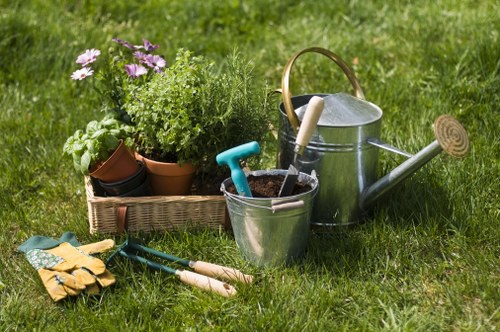
Once you know the current condition of the garden, it becomes easier to choose between ongoing maintenance, a one-off clearance or a more involved improvement project. A neat but slightly untidy space may only need mowing and hedge trimming, while an overgrown plot may need clearance before any regular care can work properly. If the layout itself feels awkward, landscaping or decking may be the more useful route.
It also helps to think about the order in which tasks should happen. For example, large-scale removal usually comes before fine shaping, and structural changes usually come before finishing touches. Contact us when you are ready to discuss the work and request a quotation. If you prefer to review the background first, about us gives a simple introduction to the company pages available on the site.
For many customers, the best outcome is not just a tidy garden today but a space that is easier to manage next month as well. That is why the job description should focus on what needs doing, what should stay and what finish you want to see. Clear instructions lead to clearer quotations, and that usually makes the next step simpler.